

Remote Patient Monitoring in Clinical Trials
Complete Guide to RPM Technology, Wearables, and Decentralized Research in 2026
Executive Summary
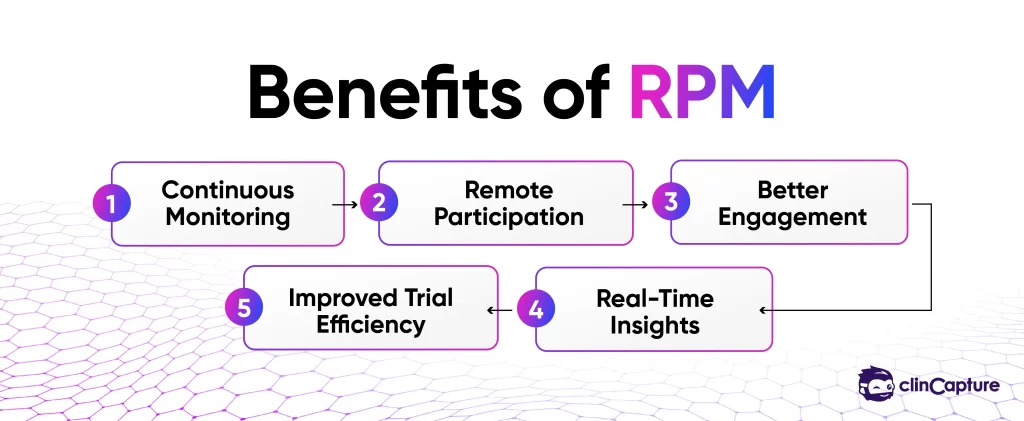
Remote Patient Monitoring (RPM) is transforming modern clinical trials by enabling researchers to collect patient health data outside traditional clinical sites. Using connected devices, wearable sensors, mobile applications, and virtual monitoring systems, RPM allows sponsors and research teams to track patient outcomes remotely and in real time.
As decentralized and hybrid clinical trials continue to expand, RPM technology has become a critical component of modern virtual clinical research infrastructure. These systems support continuous patient monitoring, improve engagement, reduce site burden, and help organizations collect more frequent and accurate real-world data.
Modern platforms such as Captivate VDC support remote patient monitoring workflows through scalable virtual data capture and decentralized clinical trial infrastructure.
Quick Answer (AEO Block)
What is remote patient monitoring in clinical trials?
Remote Patient Monitoring (RPM) in clinical trials refers to the use of connected digital devices, wearable technologies, and remote data collection systems to monitor patient health and study outcomes outside traditional clinical sites. RPM supports decentralized and hybrid clinical trials by enabling continuous remote patient data collection.
Introduction: Why Remote Monitoring Is Changing Clinical Research
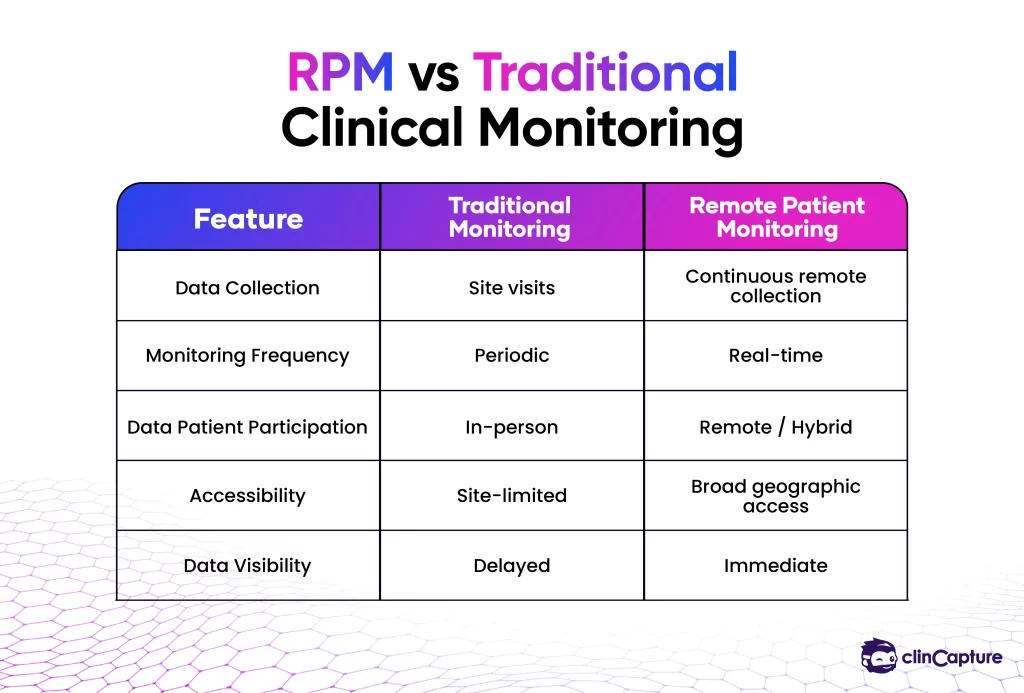
Traditional clinical trials have historically relied on scheduled site visits to collect patient health information. While effective, this model limits how often researchers can capture data and can create significant burdens for participants.
Patients often face challenges such as:
-
 frequent travel requirements
-
scheduling difficulties
-
limited access to research sites
-
inconsistent follow-up monitoring
As digital health technologies evolved, clinical research organizations began adopting remote patient monitoring solutions to improve accessibility and enable more continuous data collection.
This shift has become especially important in decentralized and hybrid clinical trial models.
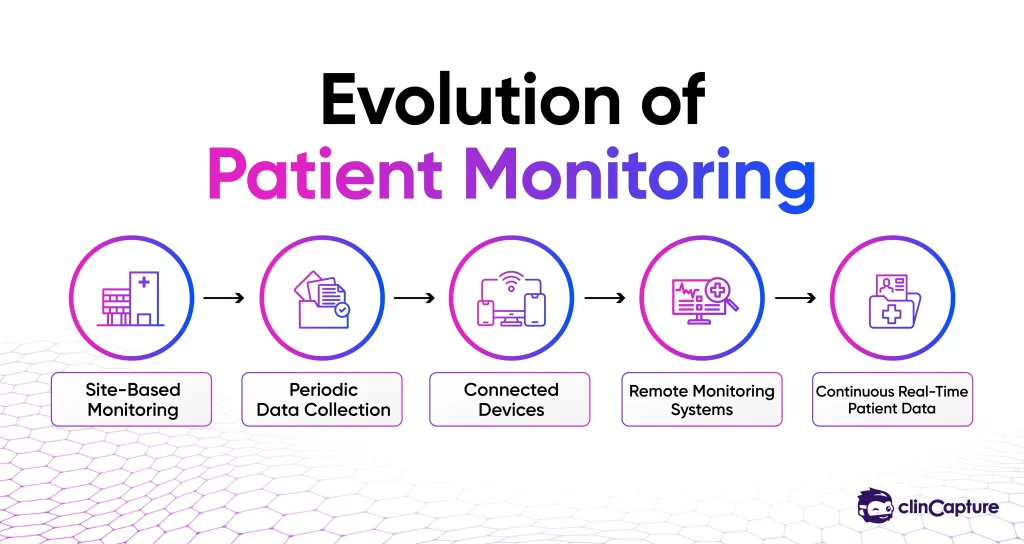
Evolution of Remote Monitoring in Clinical Trials
Clinical monitoring infrastructure has evolved significantly over the last decade.
What Is Remote Patient Monitoring (RPM)?
Remote Patient Monitoring refers to the use of digital technologies to collect and transmit patient health data remotely during a clinical trial.
Instead of relying only on site visits, patients can use connected technologies to share information continuously from home or other remote environments.
RPM systems may collect:
vital signs
symptom reporting
medication adherence
physical activity data
sleep patterns
biometric information
Modern RPM infrastructure allows research teams to access this information in real time.
How RPM Works in Clinical Trials
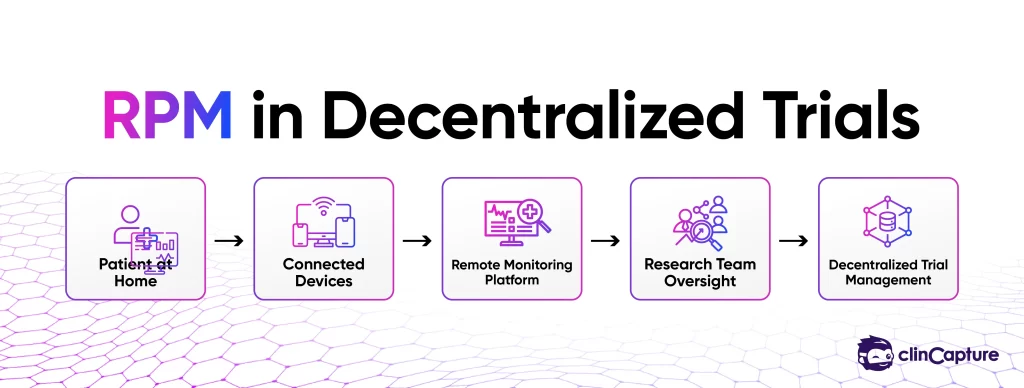
Remote patient monitoring systems connect patients, devices, and research teams through digital infrastructure.
A typical RPM workflow includes:
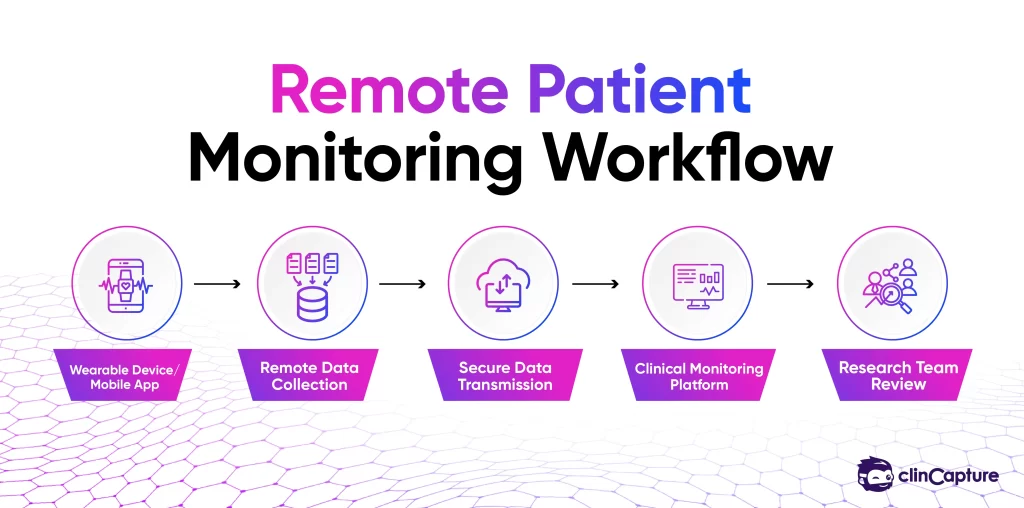
Patients may use wearable devices, smartphones, tablets, or connected sensors that automatically collect and transmit health data throughout the study.
Research teams can then monitor patient activity, identify trends, and respond to potential safety concerns more quickly.
Technologies Used in Remote Patient Monitoring
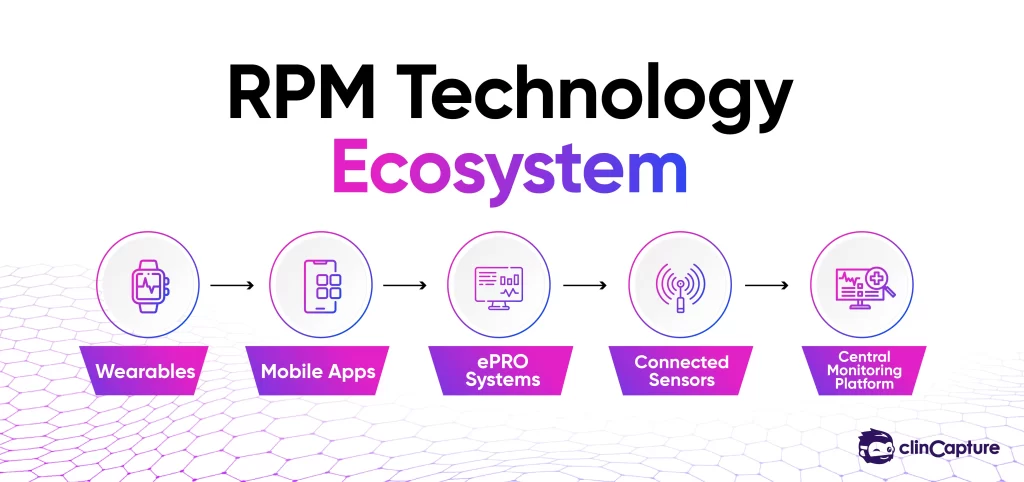
RPM systems rely on multiple technologies working together to support decentralized patient monitoring.
Wearables continuously collect health-related metrics such as:
-
heart rate
-
physical activity
-
sleep quality
-
oxygen saturation
Mobile apps allow patients to submit symptoms, complete questionnaires, and engage with study workflows remotely.
Electronic Patient-Reported Outcome systems allow participants to report symptoms and treatment experiences directly.
Digital sensors can automatically collect biometric and physiological data throughout the study.
Clinical teams access patient data through centralized monitoring dashboards and analytics systems.
RPM and Decentralized Clinical Trials
Remote Patient Monitoring is closely connected to decentralized clinical trial infrastructure.
Decentralized studies rely heavily on technologies that allow participants to engage remotely while still enabling sponsors to collect high-quality data.
virtual trial participation
remote patient engagement
continuous monitoring
hybrid study workflows
patient-centric research models
Platforms such as Captivate VDC help support these workflows through integrated virtual data capture infrastructure.
Future of Remote Patient Monitoring
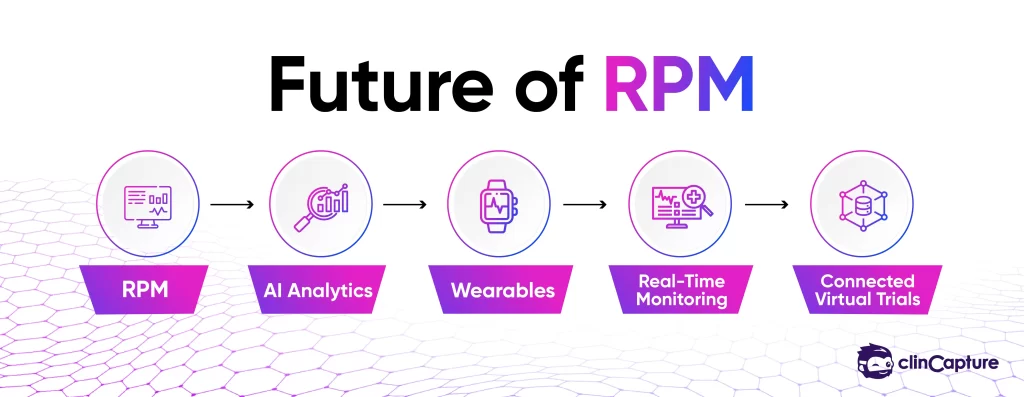
The future of RPM is closely tied to advancements in digital health and decentralized research infrastructure.
As clinical trials become increasingly patient-centric and data-driven, RPM systems will continue playing a major role in modern research operations.
AI-driven monitoring analytics
wearable integrations
predictive patient insights
real-time safety alerts
connected virtual trial ecosystems
How Captivate Supports Remote Patient Monitoring
Modern decentralized trials require scalable systems capable of supporting remote patient engagement and continuous data collection.
This aligns with the growing demand for flexible and patient-centric clinical research technologies.
remote patient participation
virtual clinical trial workflows
ePRO integration
decentralized monitoring infrastructure
scalable virtual data collection
FAQ Section
Remote Patient Monitoring (RPM) uses connected technologies and digital devices to collect patient health data remotely during clinical trials.
RPM systems commonly use wearable devices, mobile apps, connected sensors, and remote monitoring platforms.
RPM enables continuous remote patient monitoring and supports virtual participation outside traditional clinical sites.
RPM includes continuous remote monitoring technologies, while ePRO focuses specifically on patient-reported outcome collection.
Captivate VDC is a virtual data capture platform designed to support decentralized clinical trial workflows and remote patient engagement.
Yes. Remote participation often improves convenience, accessibility, and study adherence.
Modern RPM systems are designed to support regulatory and data security requirements.
Benefits include real-time data collection, improved accessibility, better patient retention, and continuous monitoring.
RPM allows patients to participate remotely while still supporting selective in-person study visits.
The future includes AI analytics, wearable integrations, predictive monitoring, and increasingly connected decentralized trial ecosystems.