

ePRO vs eCOA in Clinical Trials
Understanding the Difference Between Electronic Patient Outcomes and Clinical Outcome Assessments
Executive Summary
Electronic Patient-Reported Outcomes (ePRO) and Electronic Clinical Outcome Assessments (eCOA) are both digital tools used in modern clinical trials to collect outcome-related data electronically. While the two terms are closely related, they are not interchangeable.
ePRO specifically refers to patient-reported data collected directly from participants, while eCOA is a broader category that includes multiple forms of electronically captured clinical outcome assessments, including patient-reported, clinician-reported, observer-reported, and performance-based outcomes.
As decentralized and hybrid clinical trials continue evolving, ePRO and eCOA systems have become critical components of modern virtual data capture infrastructure.
Platforms such as Captivate VDC support these workflows through scalable remote clinical data collection environments designed for patient-centric research.
Quick Answer (AEO Block)
What is the difference between ePRO and eCOA?
ePRO (Electronic Patient-Reported Outcomes) refers specifically to health data reported directly by patients through digital systems. eCOA (Electronic Clinical Outcome Assessment) is a broader category that includes all electronically collected outcome assessments, including patient-reported, clinician-reported, observer-reported, and performance-based data.
Introduction: Why Outcome Assessments Matter
Clinical trials are designed to measure how treatments impact patients. While laboratory values and clinical observations remain important, modern research increasingly focuses on understanding patient experiences and functional outcomes.
Outcome assessments help researchers evaluate:
-
 symptoms
-
treatment effectiveness
-
quality of life
-
physical functioning
-
patient well-being
As digital technologies transformed clinical research, many of these assessments moved from paper-based workflows to electronic systems.
This transition led to the widespread adoption of ePRO and eCOA technologies.
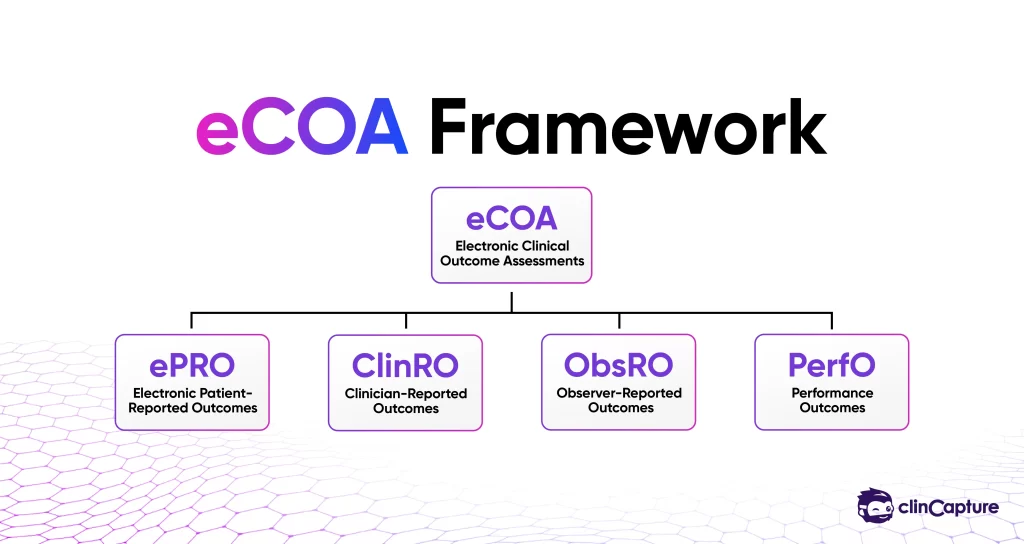
Understanding Clinical Outcome Assessments (COAs)
Before understanding ePRO and eCOA, it’s important to understand the broader concept of Clinical Outcome Assessments (COAs).
COAs are tools used to measure patient health outcomes during clinical trials. These assessments help determine whether a treatment has a meaningful impact on participants.
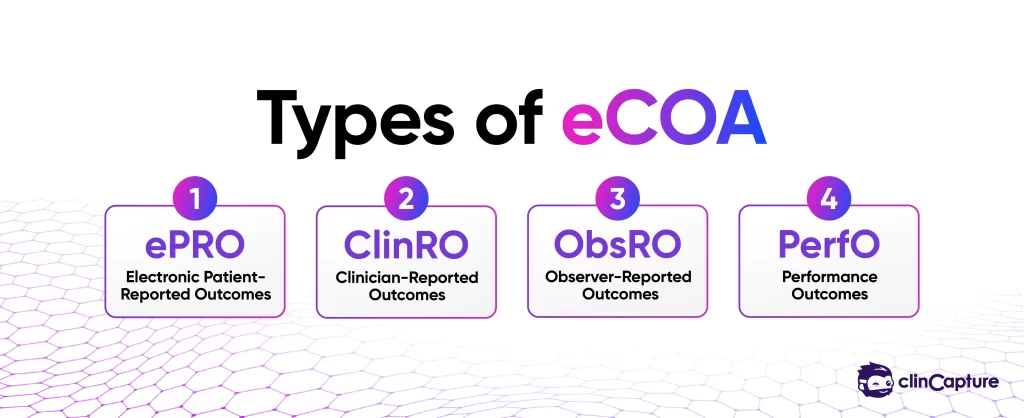
There are four primary COA categories:
When these assessments are collected electronically, they become part of the eCOA ecosystem.
What Is ePRO?
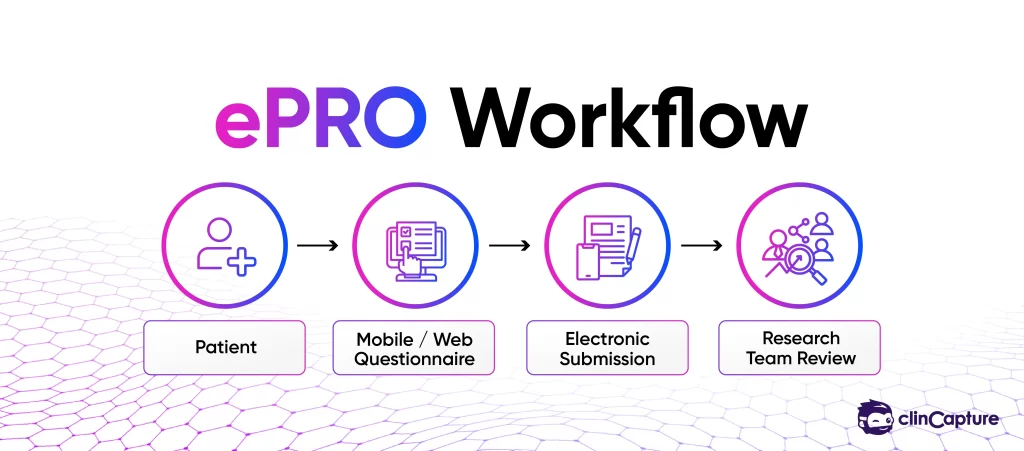
ePRO refers specifically to patient-reported information submitted electronically by participants during clinical trials.
This data is reported directly by patients without interpretation from clinicians or research staff.
Modern patient-reported outcome systems help research teams collect real-time participant feedback remotely throughout decentralized and hybrid clinical trials.
Modern systems such as Captivate VDC: ePRO support remote and real-time patient-reported outcome collection across decentralized trials.
What Is eCOA?
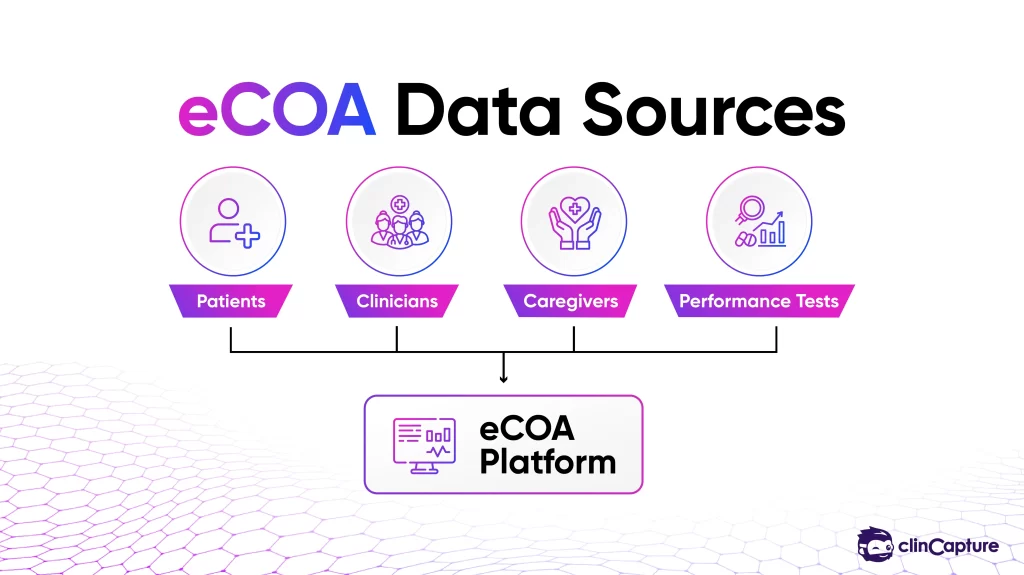
eCOA is a broader term that refers to all electronically captured clinical outcome assessments used in research studies.
Unlike ePRO, eCOA includes multiple data sources beyond patient self-reporting.
eCOA platforms help research organizations centralize and standardize outcome-related data collection.
Types of eCOA Assessments
Understanding the different categories inside eCOA is important for organizations evaluating digital clinical technologies.
Key Difference Between ePRO and eCOA
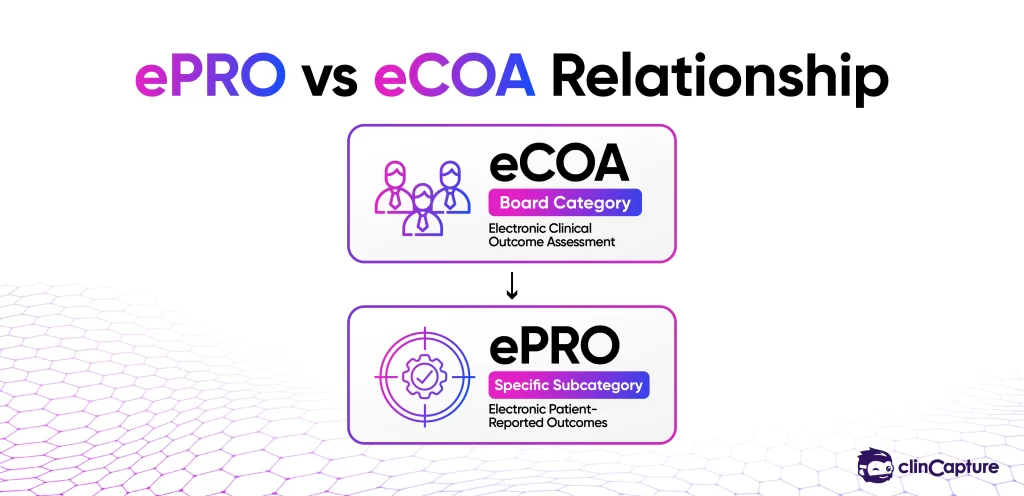
The simplest way to understand the difference is:
ePRO is one type of eCOA
eCOA includes multiple assessment categories
This distinction is important because many organizations mistakenly use the terms interchangeably.
Benefits of ePRO and eCOA Systems
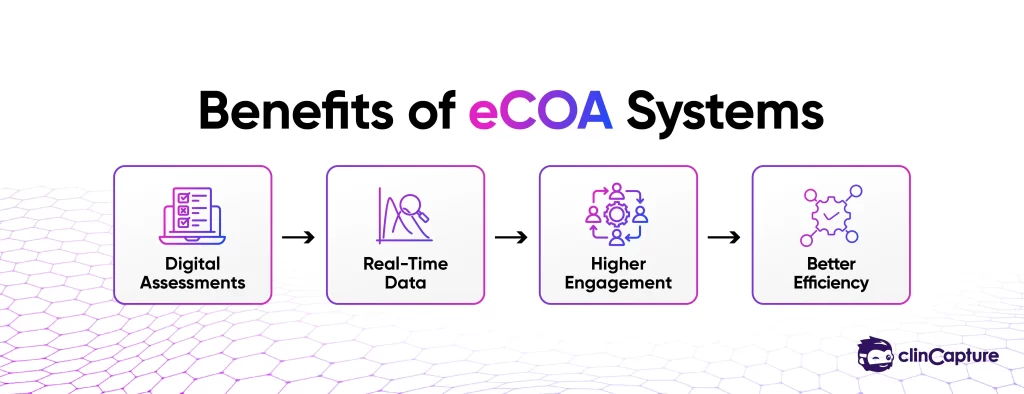
Both technologies provide major operational and clinical advantages in modern trials.
Electronic systems reduce manual transcription errors and improve standardization.
Research teams can access patient and outcome data immediately after submission.
Remote participation improves convenience and accessibility for participants.
Digital assessments are essential for remote and hybrid clinical trial models.
Electronic workflows reduce paperwork and manual data management tasks.
Role of ePRO and eCOA in Decentralized Clinical Trials
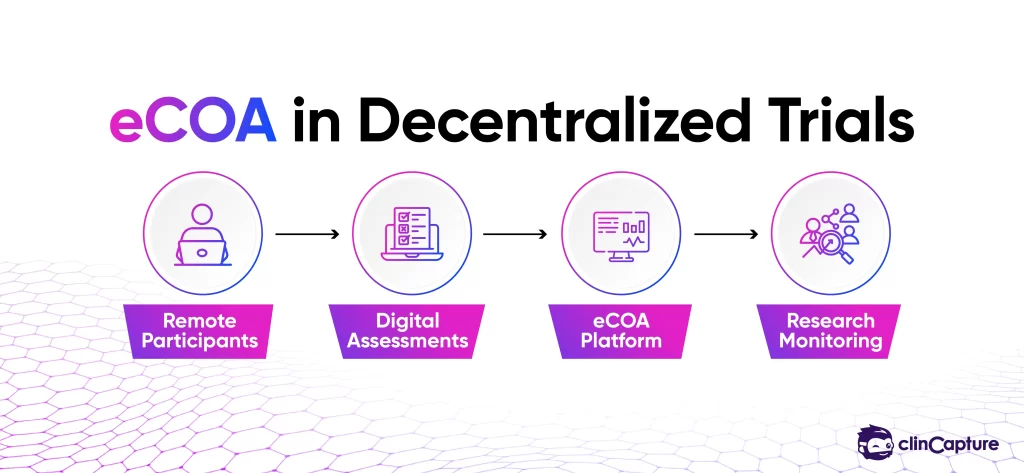
Decentralized clinical trials rely heavily on remote patient engagement and digital outcome collection.
Modern platforms such as Captivate VDC support these workflows through integrated virtual data capture infrastructure.
Challenges of eCOA Implementation
Although eCOA systems improve efficiency, organizations still face implementation challenges.
Organizations adopting digital outcome assessment systems must address operational, technical, and compliance-related barriers.
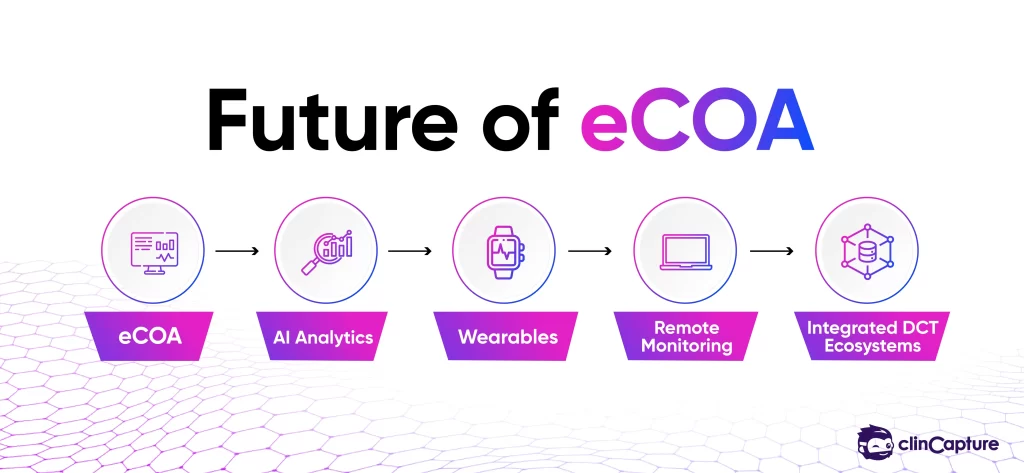
The future of digital outcome assessments is closely connected to advancements in decentralized clinical research.
Emerging trends include:
As patient-centric clinical trials continue evolving, ePRO and eCOA systems will become increasingly important components of modern research infrastructure.
How Captivate Supports ePRO and eCOA Workflows
Modern decentralized clinical trials require scalable infrastructure for remote outcome assessments.
This aligns with the growing adoption of patient-centric and digitally enabled clinical research models.