

What Are Decentralized Clinical Trials (DCTs)?
Complete Guide to Remote and Hybrid Clinical Trial Models in 2026
Executive Summary
Decentralized Clinical Trials (DCTs) are clinical research studies that use digital technologies, remote monitoring tools, and virtual workflows to reduce or eliminate the need for participants to visit physical research sites regularly.
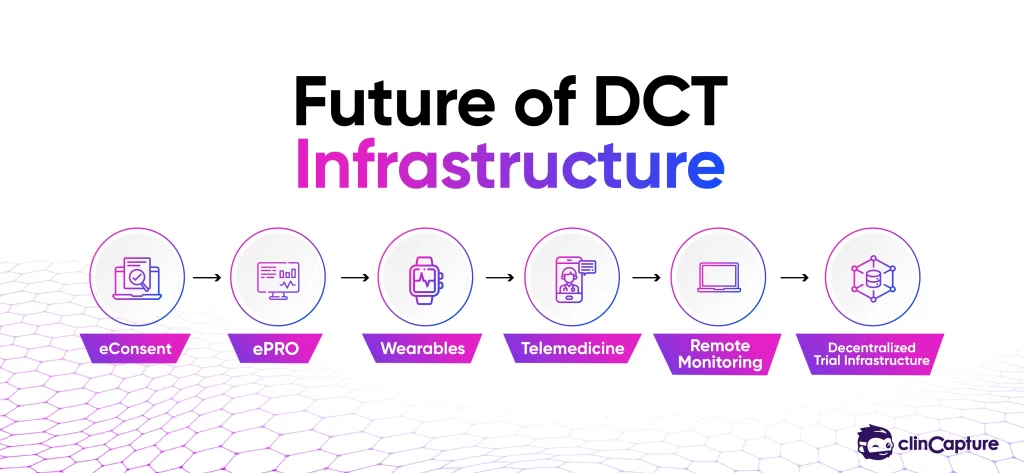
Unlike traditional site-based clinical trials, decentralized trials allow patients to participate remotely through technologies such as:
-
 ePRO systems
-
eConsent platforms
-
wearable devices
-
telemedicine
-
remote patient monitoring tools
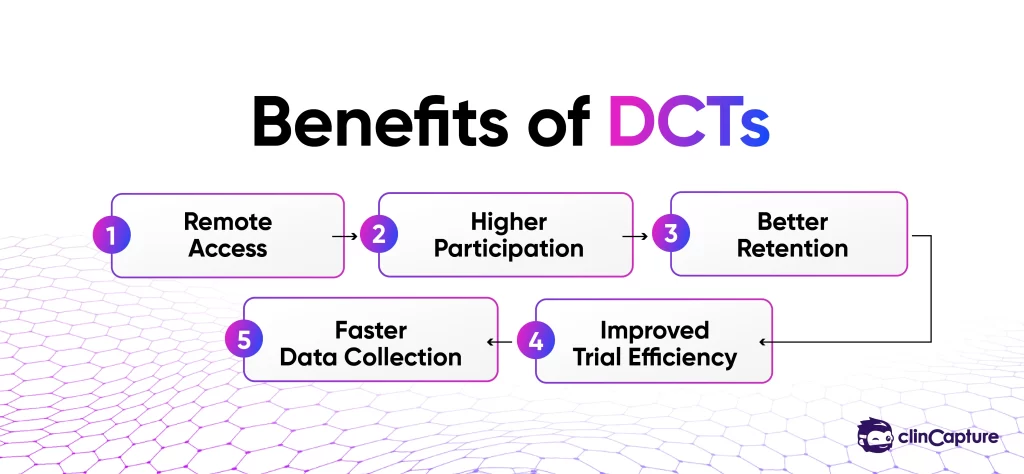
DCTs are transforming clinical research by improving patient accessibility, increasing engagement, and enabling more flexible trial participation.
Modern platforms such as Captivate VDC support decentralized and hybrid trial workflows through integrated remote data collection and patient engagement infrastructure.
Quick Answer
What is a decentralized clinical trial?
A decentralized clinical trial (DCT) is a clinical study that uses digital technologies and remote workflows to allow participants to engage in research activities from home or outside traditional clinical sites. DCTs commonly use ePRO , eConsent , telemedicine, and remote monitoring tools to support virtual participation.
Introduction: Why Clinical Trials Are Changing
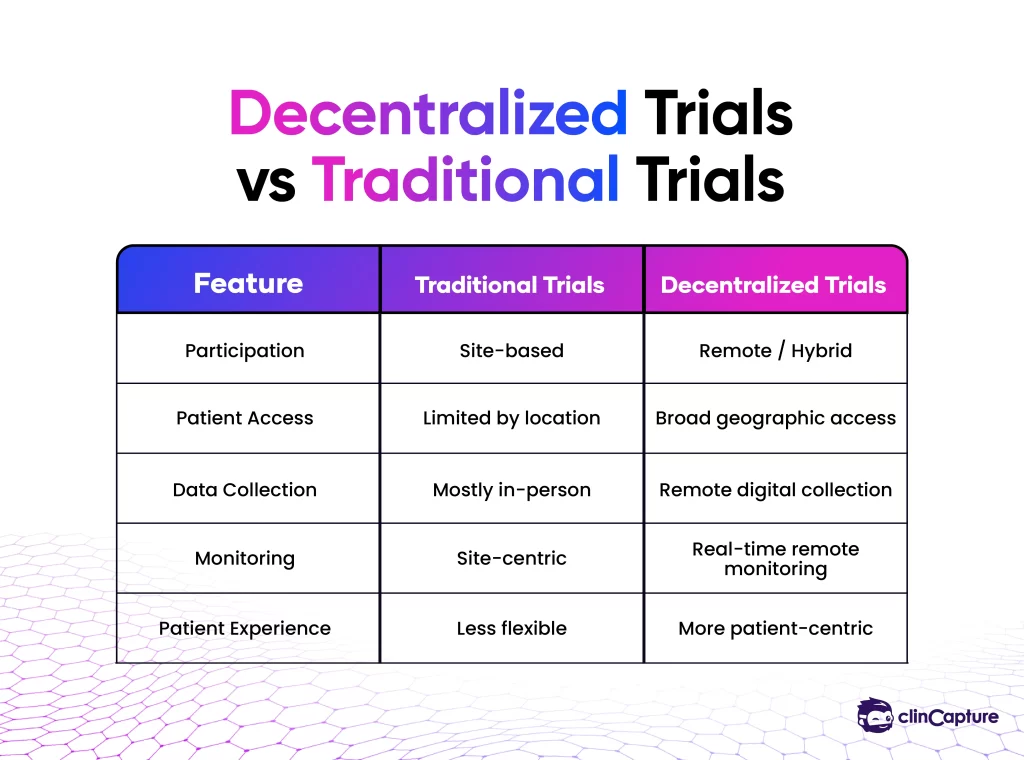
Traditional clinical trials have historically relied on participants visiting physical research sites for most study activities. While this model has been effective for decades, it also introduced several limitations.
Common challenges included:
-
patient travel burden
-
limited geographic access
-
lower patient retention
-
slower recruitment timelines
-
operational inefficiencies
As digital health technologies evolved, clinical research organizations began adopting more flexible models that allowed participants to engage remotely.
This shift led to the rise of decentralized clinical trials.
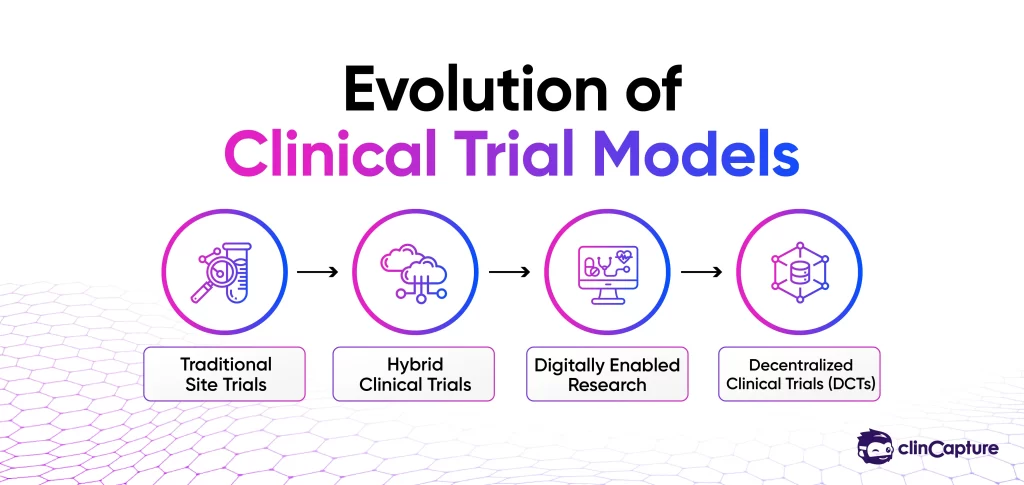
Evolution from Traditional Trials to DCTs
Clinical trial infrastructure has changed significantly over the last decade.
What Makes a Trial “Decentralized”?
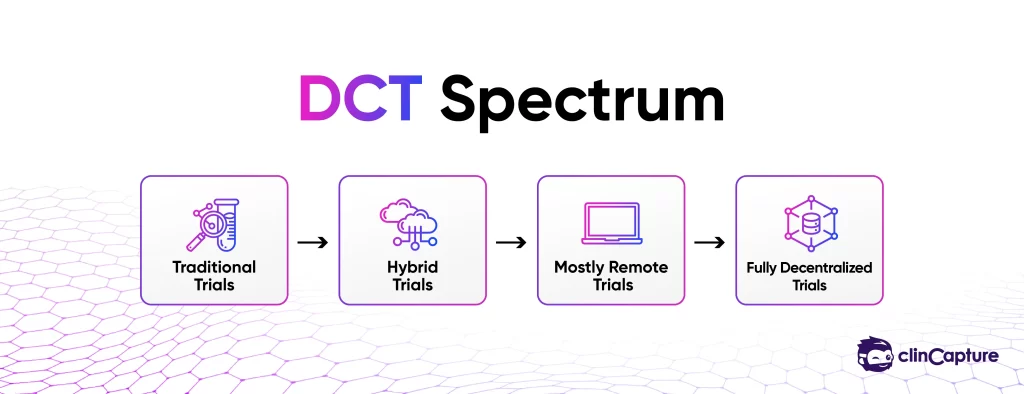
A decentralized clinical trial uses digital systems and remote processes to conduct some or all study activities outside traditional research sites.
Instead of requiring frequent in-person visits, participants can engage remotely through connected technologies.
-
completing questionnaires online
-
signing digital consent forms
-
attending virtual appointments
-
using wearable devices
-
submitting health data remotely
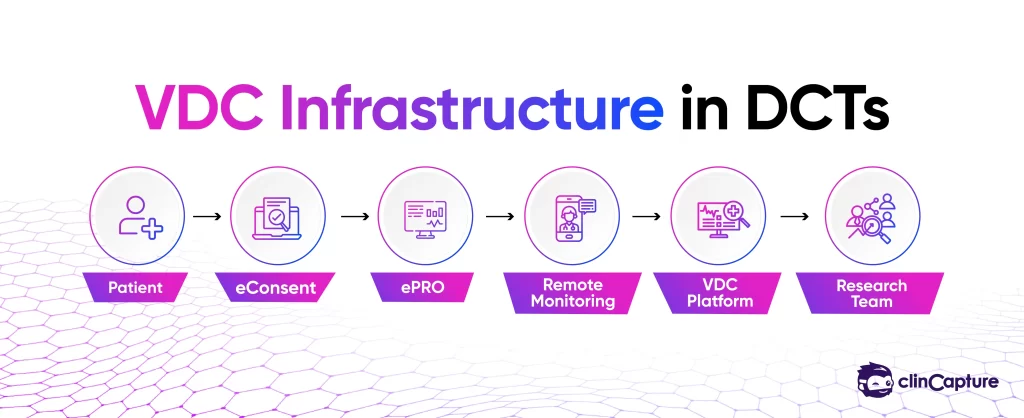
Modern VDC infrastructure enables these workflows while maintaining compliance and study oversight.
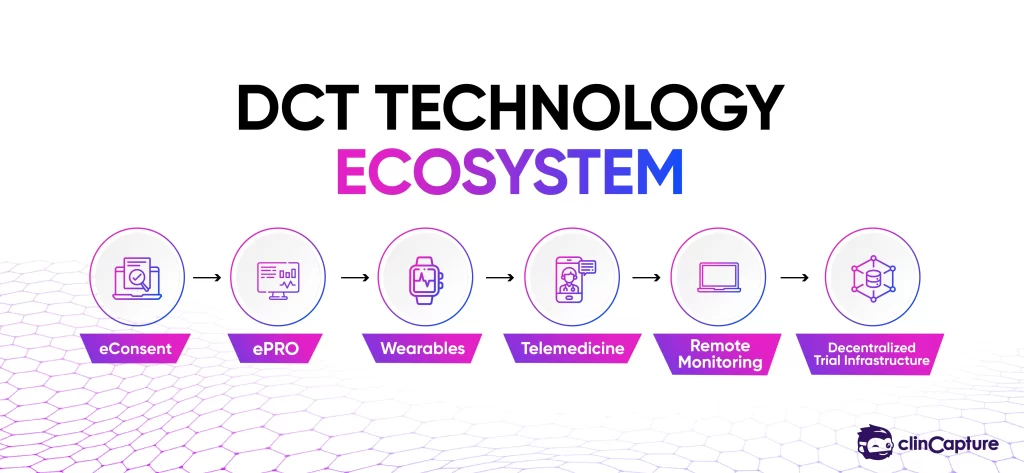
Core Technologies Used in DCTs
Decentralized trials rely on multiple connected technologies working together.
ePRO systems allow participants to report symptoms, treatment experiences, and quality-of-life data remotely through digital devices.
eConsent platforms enable remote digital enrollment and electronic informed consent workflows.
Virtual visits allow investigators and participants to communicate remotely during the study.
Wearables can continuously collect health data such as heart rate, activity levels, and sleep metrics.
Research teams can monitor patient activity and study compliance in real time.
Challenges of Decentralized Trials
Despite their advantages, decentralized trials also introduce operational and regulatory challenges.
Some participants may have limited access to digital devices or internet connectivity.
Remote data collection requires strong cybersecurity and compliance infrastructure.
Organizations must ensure remote workflows comply with regional regulations and ethical requirements.
Managing multiple digital systems and vendors can increase workflow complexity.
Role of VDC Platforms in DCTs
Virtual Data Capture (VDC) systems are central to decentralized clinical trial infrastructure.
-
remote patient data collection
-
digital engagement workflows
-
electronic consent management
-
patient-reported outcomes
-
virtual study participation
Modern platforms such as Captivate VDC help organizations manage decentralized trial operations through integrated remote clinical workflows.
How Captivate Supports Decentralized Clinical Trials
Modern decentralized trials require connected digital infrastructure capable of supporting remote patient participation.
-
support remote enrollment
-
collect patient-reported outcomes
-
streamline decentralized workflows
-
improve patient engagement
-
manage virtual clinical trial operations